

The Martian by Andy Weir
Follows astronaut Mark Watney, stranded on Mars after a dust storm forces his crew to evacuate, leaving him behind, presumed dead. Alone and with limited supplies, Watney uses his engineering skills and ingenuity to survive, facing a series of life-threatening challenges. Determined not to give up, he fights against impossible odds, hoping to make it back home.
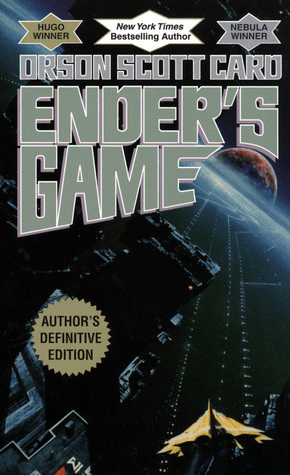
Ender’s Game by Orson Scott Card
Six-year-old Andrew “Ender” Wiggin is unknowingly being trained to lead humanity in a war against an alien species known as the Buggers. Believing he’s playing military simulations, Ender endures grueling tests designed to push him to the brink—revealing his brilliance or breaking him. Meanwhile, his brilliant but contrasting siblings, Peter and Valentine, wage their own battle for influence over Earth’s political future. As the war escalates and the lines between game and reality blur, Ender must grapple with the cost of survival, leadership, and humanity’s hope for salvation.
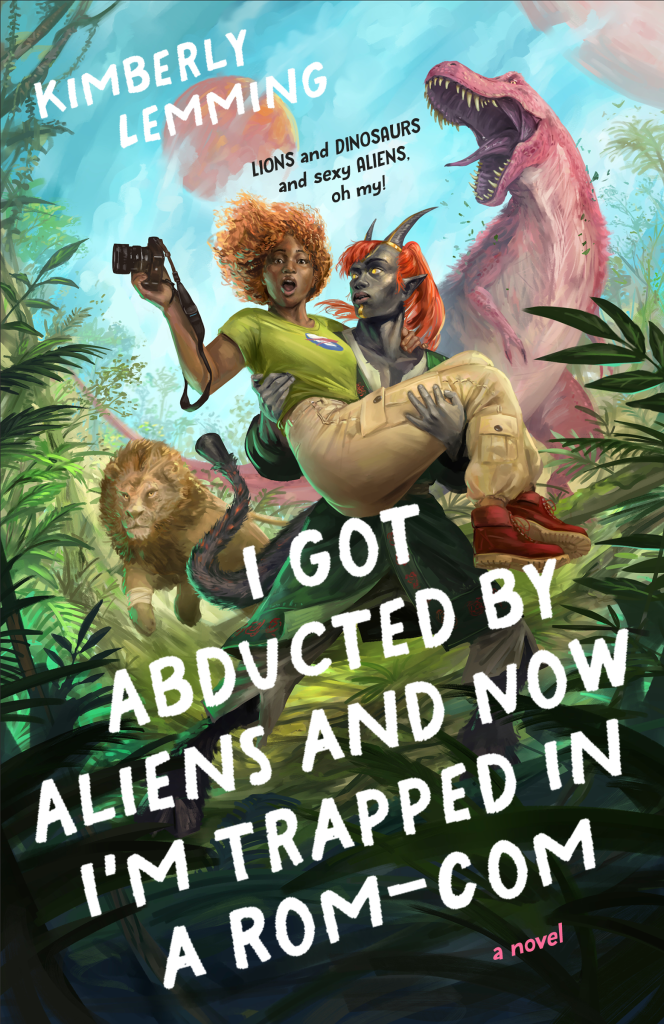
I Got Abducted by Aliens and Now I’m Trapped in a Rom-Com by Kimberly Lemming
Dory Valentine is a wildlife biology PhD student who, after being attacked by a lion, gets abducted by aliens. In an escape attempt, she crash-lands on an alien planet filled with dinosaurs. There, she’s rescued by a sexy alien, Sol, and teams up with another equally attractive and mysterious alien, Lok. As the trio embarks on thrilling adventures, Dory finds herself drawn to both aliens, leading to a steamy, hilarious romance on their quest to survive and uncover why they’re all together on this bizarre planet.
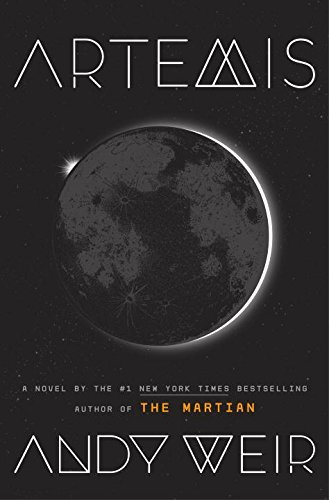
Artemis by Andy Weir
Follows Jazz Bashara, a smuggler on the moon’s only city, Artemis, struggling with debt and a low-paying job. When she spots an opportunity for a lucrative crime, she takes it, only to find herself entangled in a dangerous conspiracy for control of Artemis. Now, her survival depends on pulling off a risky gambit even more dangerous than her first crime.
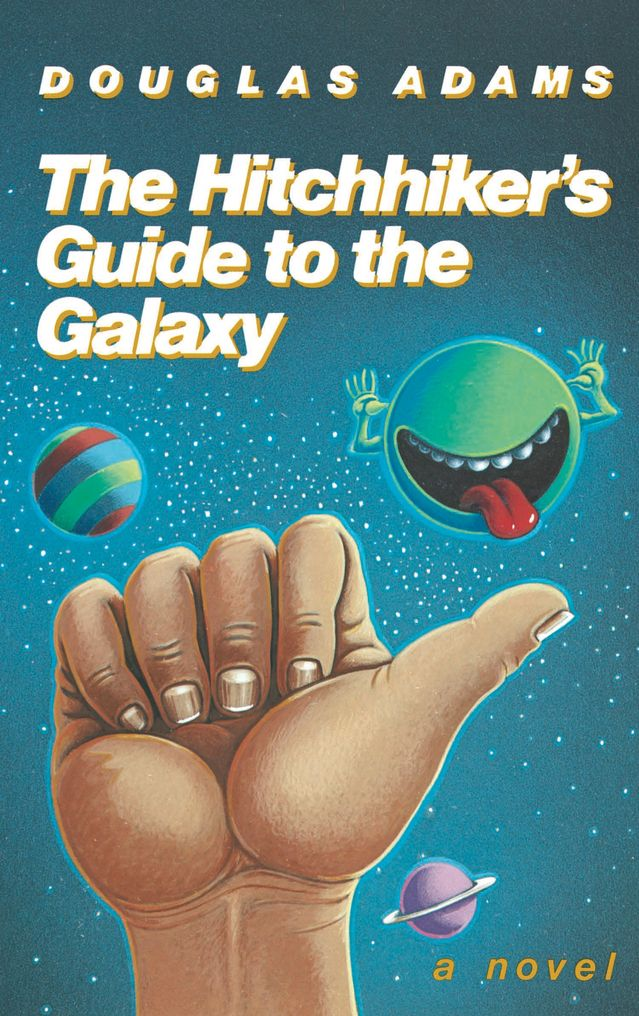
Hitchhiker’s Guide to the Galaxy by Douglas Adams
Seconds before Earth is destroyed to make way for a galactic freeway, Arthur Dent is whisked away by Ford Prefect—his friend and undercover alien—to embark on a wildly absurd space adventure. Armed with only a towel, sarcasm, and The Hitchhiker’s Guide to the Galaxy, Arthur meets eccentric aliens, including a two-headed president, a morose robot, and a woman he once awkwardly hit on, as he grapples with cosmic absurdities, disappearing pens, and the meaning of life in Douglas Adams’ hilarious sci-fi classic.
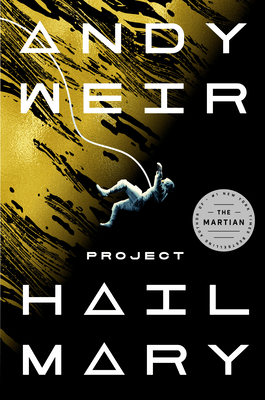
Project Hail Mary by Andy Weir
Ryland Grace wakes up alone on a spaceship millions of miles from Earth, with no memory of who he is or how he got there. His crewmates are dead, and he’s left with only two corpses for company. As his memory slowly returns, he realizes he’s on a critical mission to save humanity from an extinction-level threat. With time running out and no one nearby, Ryland must solve a scientific mystery to complete the mission—alone, or is he?

Packing for Mars: The Curious Science of Life in the Void by Mary Roach
Dives into the bizarre, hilarious, and surprisingly complex world of space travel, focusing on the science of how humans live without gravity. With her trademark wit and curiosity, she explores everything from zero-gravity hygiene and space toilets to crash tests and astronaut training, uncovering the oddities and challenges NASA faces in making space livable. Blending laugh-out-loud humor with fascinating research, Roach offers an unforgettable look at the human side of space exploration.
Astrophysics for People in a Hurry by Neil DeGrasse Tyson
Neil deGrasse Tyson distills the vast and complex universe into a compact, accessible guide for the curious but time-pressed reader. With clarity and wit, he tackles big questions about space, time, matter, and our place in the cosmos—delivering mind-expanding science in short, digestible chapters perfect for a busy world.

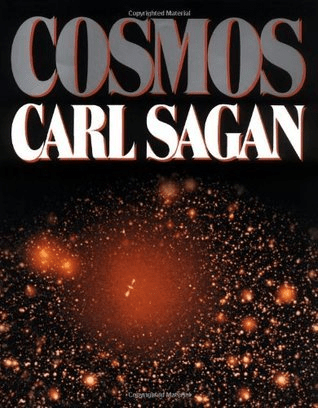
Cosmos by Carl Sagan
A sweeping, visually rich companion to his iconic TV series that explores the story of science within the broader context of human civilization. Blending history, philosophy, and cutting-edge astronomy, Sagan traces 15 billion years of cosmic evolution—from ancient libraries and planetary exploration to the origin of life and the potential for extraterrestrial contact—revealing how humanity’s quest for knowledge connects us deeply to the universe itself.
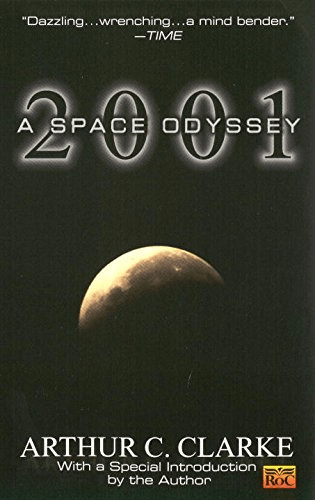
2001: A Space Odyssey by Arthur C. Clarke
A landmark science fiction novel that begins with the discovery of a mysterious monolith buried beneath the Moon’s surface—a discovery that triggers humanity’s first deep space mission. As the voyage unfolds, eerie malfunctions and growing tensions hint at a far greater mystery, blending hard science with philosophical inquiry about evolution, artificial intelligence, and our place in the cosmos.

Failure is Not an Option: Mission Control From Mercury to Apollo 13 and Beyond by Gene Kranz
A gripping memoir chronicling the behind-the-scenes story of NASA’s mission control during the Mercury, Gemini, and Apollo programs—including the moon landing and the harrowing Apollo 13 rescue. As a flight director, Kranz gives a vivid, insider’s account of the high-stakes challenges, technological risks, and extraordinary teamwork that defined America’s space race, blending personal stories with insights into leadership, crisis management, and the power of human resilience.
Carrying the Fire: An Astronaut’s Journey by Michael Collins
A candid, eloquent memoir by the Apollo 11 astronaut who piloted the command module while Armstrong and Aldrin walked on the moon. Blending technical insight with poetic reflection, Collins recounts his journey from Air Force test pilot to astronaut, and offers a deeply human perspective on space travel, isolation, teamwork, and viewing Earth from the vastness of space. It stands as a timeless and personal account of one of history’s greatest explorations.

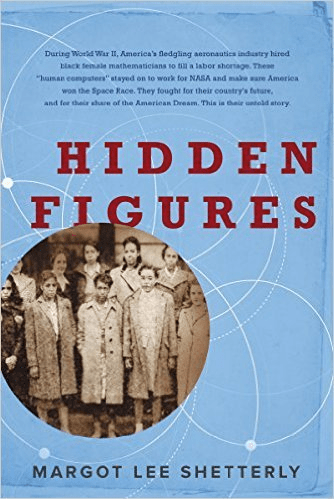
Hidden Figures by Margot Lee Shetterly
Tells the previously untold true story of the African-American women mathematicians who were essential to NASA’s early space missions. Working as “human computers” during a time of segregation and racial injustice, these women—Katherine Johnson, Dorothy Vaughan, Mary Jackson, and others—calculated the trajectories that would send rockets and astronauts safely into space. Set against the backdrop of WWII, the civil rights movement, and the space race, the book reveals how their brilliance, perseverance, and quiet courage helped shape one of humanity’s greatest achievements while challenging deeply entrenched discrimination.
Orbital by Samantha Harvey
A team of astronauts aboard the International Space Station observes Earth’s beauty and fragility, witnessing storms, landscapes, and life from space. As they receive personal news and reflect on their connection to the planet, they grapple with profound questions about life, loss, and humanity’s role in protecting Earth.

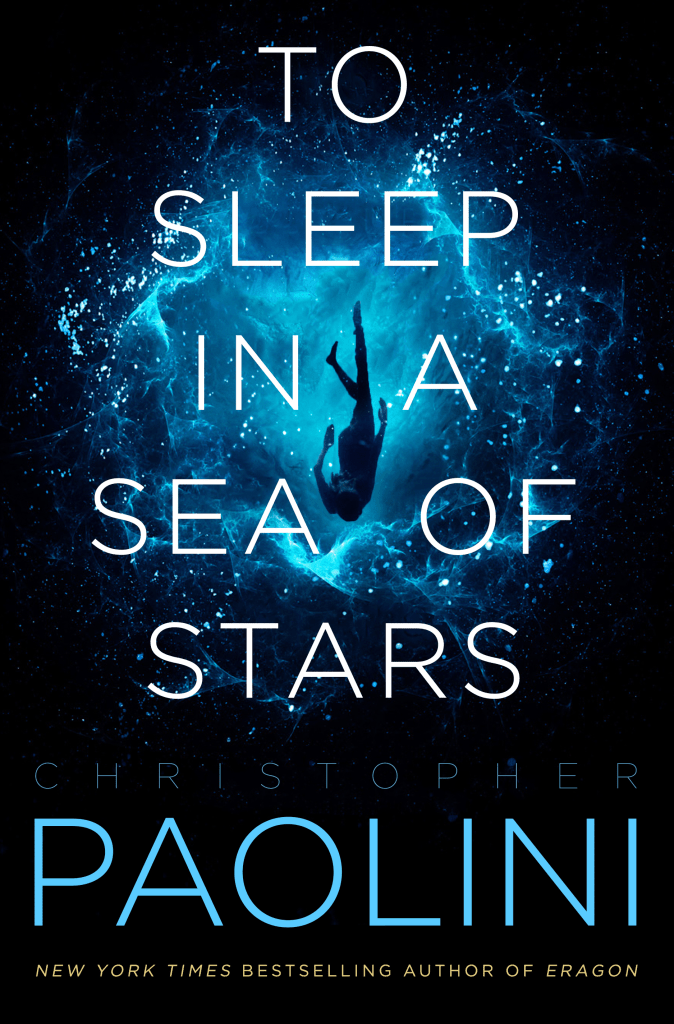
To Sleep in a Sea of Stars by Christopher Paolini
Kira Navárez’s dream of life on new worlds turns into a nightmare when she discovers an alien relic on an uncolonized planet. What starts as excitement quickly turns to terror as an ancient threat awakens. As war breaks out across the stars, Kira embarks on a journey that tests the limits of humanity, with Earth’s survival depending on her.
Rocket Men: The Daring Odyssey of Apollo 8 and the Astronauts Who Made Man’s First Journey to the Moon by Robert Kurson
The inside story of NASA’s Apollo 8 mission, the first manned journey to the Moon in 1968. Faced with mounting pressure and a tight timeline, NASA rushed the mission, sending astronauts Frank Borman, Jim Lovell, and Bill Anders to the Moon with just four months of preparation. Amid political unrest and global turmoil, Apollo 8 became a bold test of American resolve, showcasing the bravery and risk involved in humanity’s first voyage beyond Earth.

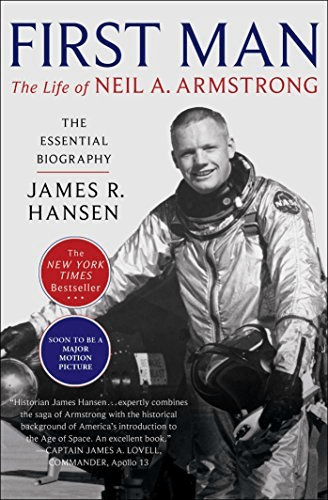
First Man: The Life of Neil A. Armstrong by James R. Hansen
The definitive biography of Neil Armstrong, based on exclusive interviews and private documents. Author James R. Hansen offers a compelling look at Armstrong’s life, from his early days as a naval aviator to his role as the first man on the Moon during Apollo 11. The book delves into Armstrong’s career, personal sacrifices, and the complex legacy of the astronaut who cared more about flying than fame. It’s a deep, nuanced portrait of an American icon.
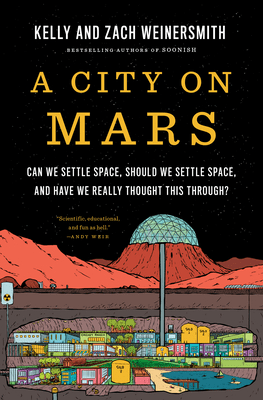
A City on Mars: Can We Settle Space, Should We Settle Space, and Have We Really Thought This Through? by Kelly Weinersmith
Explores the possibilities and challenges of human space colonization. The book addresses the rapid advancements in space technology but questions whether humanity is truly ready to settle new worlds. With humor and in-depth research, the Weinersmiths tackle topics like space agriculture, governance, reproduction, and potential conflicts, all while pondering whether space settlements could create more problems than they solve. The book mixes science with fun, answering a wide range of questions about humanity’s future in space.
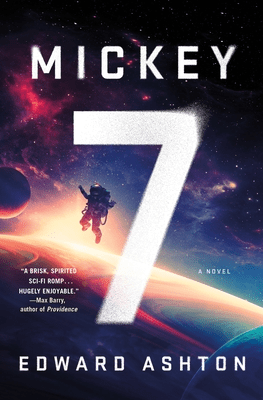
Mickey7 by Edward Ashton
Mickey Barnes is an Expendable, a human clone created for dangerous space missions. On his seventh iteration, Mickey faces a grim existence on the ice planet Niflheim, where his clones live, die, and are replaced. After surviving an accident and meeting his next iteration, Mickey8, he must hide the truth about his past deaths and his encounter with the planet’s native species. As Mickey grapples with the trauma of his past lives and questions his purpose, he must navigate the perilous dynamics of the colony while facing a crisis of identity, humanity, and survival.
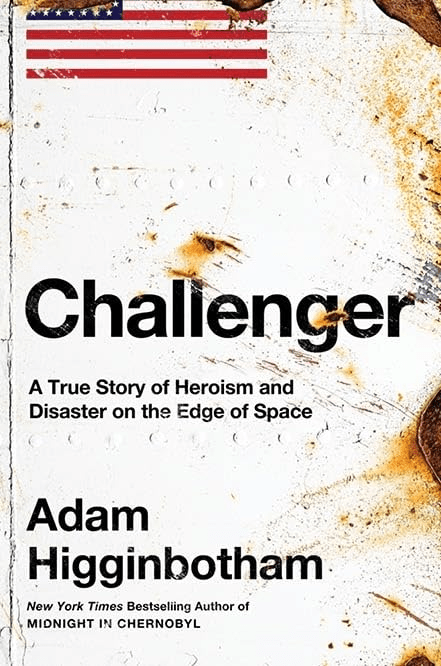
Challenger: A True Story of Heroism and Disaster on the Edge of Space by Adam Higginbotham
A detailed, minute-by-minute account of the 1986 space shuttle disaster. It recounts the tragic event, where all seven crew members, including schoolteacher Christa McAuliffe, perished seventy-three seconds into flight. The book dives into the years leading up to the disaster, highlighting the political and corporate pressures that compromised safety, the heroes and whistleblowers who fought for the truth, and the investigation that followed. Through new archival research, it sheds light on the ignored warnings, the human lives affected, and the broader context of the Challenger tragedy.
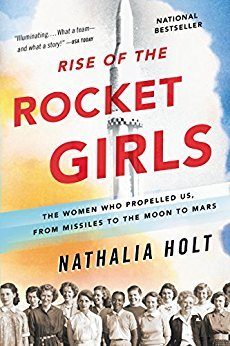
Rise of the Rocket Girls: The Women Who Propelled Us, from Missiles to the Moon to Mars by Nathalia Holt
The inspiring true story of the women who played a key role in launching America into space. In the 1940s and 50s, these “human computers” were tasked with calculating velocities and plotting trajectories at the Jet Propulsion Laboratory. With only pencils, paper, and their mathematical skills, they transformed rocket design, contributed to the first American satellites, and helped make space exploration possible. Holt’s book offers a unique perspective on these groundbreaking women, who defied both gender norms and scientific boundaries.
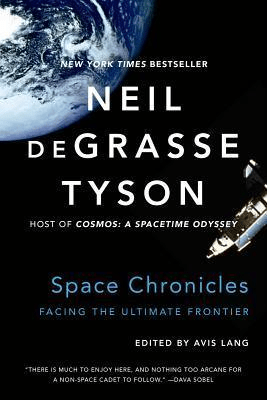
Space Chronicles: Facing the Ultimate Frontier by Neil deGrasse Tyson
Explores the past, present, and future of space exploration, examining America’s space program at a pivotal moment. With NASA’s space shuttle program ended and no American astronauts launched from U.S. soil until the 2020s, Tyson argues for the importance of rekindling enthusiasm for space exploration. He emphasizes how exploring the cosmos can enrich society in areas like education, economy, national security, and morale. Through his signature wit, Tyson provides a compelling case for why NASA remains vital to America’s future as a global leader in innovation and discovery.
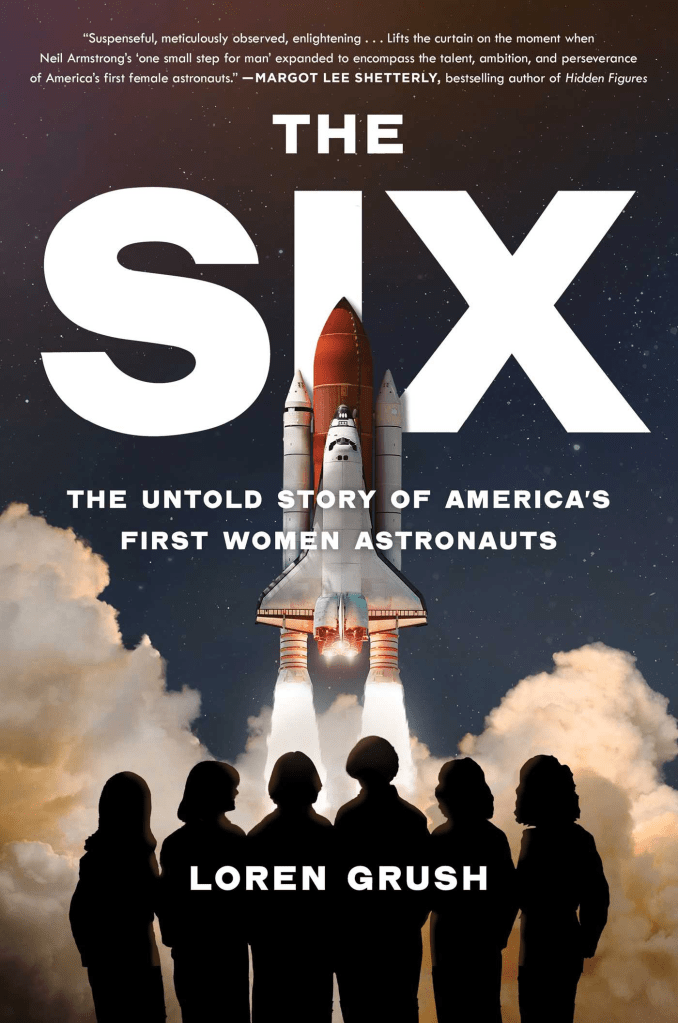
The Six: The Untold Story of America’s First Women Astronauts by Loren Grush
The inspiring true story of America’s first women astronauts. In 1978, NASA selected six extraordinary women—Sally Ride, Judy Resnik, Anna Fisher, Kathy Sullivan, Shannon Lucid, and Rhea Seddon—who broke barriers to make history aboard NASA’s Space Shuttle. At a time when women were excluded from space programs, NASA eventually opened its doors to diverse candidates. Grush chronicles their struggles with sexism, intense training, and groundbreaking achievements, highlighting their pivotal roles in advancing space exploration. Tragically, Judy Resnik was lost in the Challenger disaster, but the legacy of the Six lives on in their contributions to the space program.
American Moonshot: John F. Kennedy and the Great Space Race by Douglas Brinkley
Chronicles the space race and America’s achievement of landing a man on the Moon. It explores President Kennedy’s challenge, the creation of NASA, and the Apollo program. Drawing on new sources and interviews, Brinkley highlights the political, cultural, and scientific factors that led to the historic Moon landing, showcasing the individuals and technology that made it possible during the Cold War.

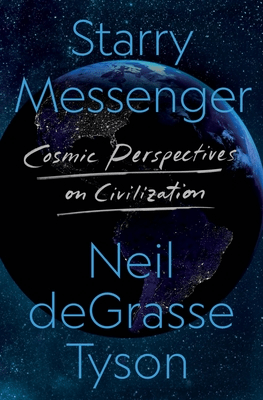
Starry Messenger: Cosmic Perspectives on Civilization
Uses a cosmic perspective to explore society’s deepest divides—war, politics, religion, race, and more—offering science and rationality as tools for unity and clarity. With clear, eloquent prose, he reveals how viewing Earth through a scientific lens can reshape our priorities and actions, fostering a deeper understanding of ourselves and our place in the universe.
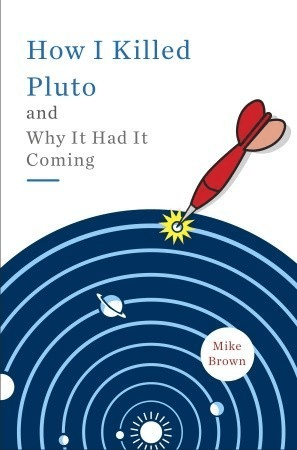
How I Killed Pluto and Why It Had It Coming by Mike Brown
Astronomer Mike Brown’s witty and heartfelt account of the discovery that led to Pluto’s reclassification as a dwarf planet—and the unexpected backlash that followed. Blending science, humor, and personal reflection, Brown recounts how his search for a new planet upended astronomy and changed his own life in deeply human ways.

Sea of Tranquility by Emily St. John Mandel
A time-travel novel spanning centuries and worlds, from 1912 Vancouver Island to a moon colony 500 years in the future. Through interconnected lives—a young exile, a famous writer, and a detective investigating a mysterious anomaly—it explores art, pandemics, and the fragile threads of reality. Both tender and thought-provoking, it’s a standout work of speculative fiction.
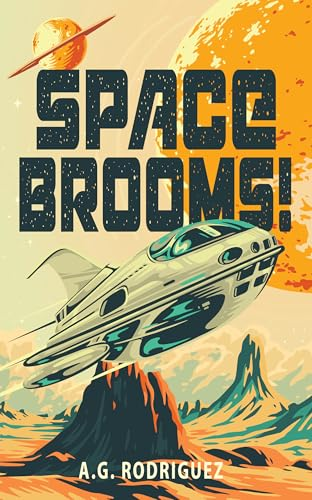
Space Brooms! by AG Rodriguez
In this fast-paced sci-fi adventure, space custodian Johnny Gomez stumbles upon a mysterious data-chit hidden in alien waste, launching him into a wild chase across the solar system. With smugglers, assassins, and a crime syndicate hot on his trail, Johnny must outrun danger and confront his past.
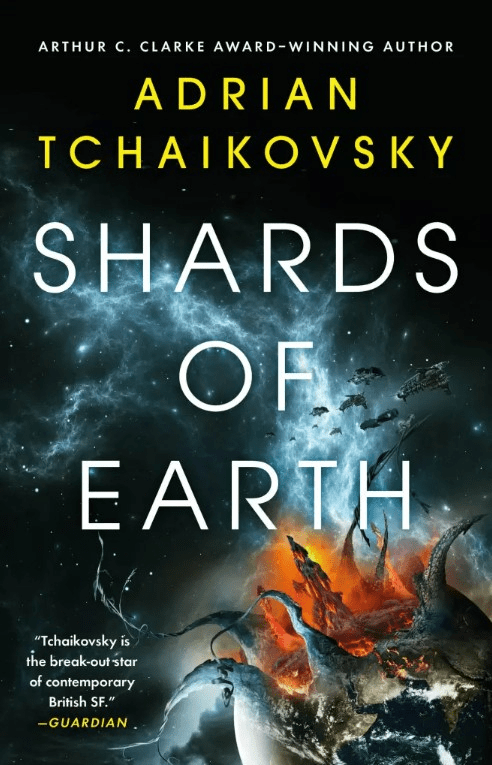
Shards of Earth by Adrian Tchaikovsky
A gripping space opera about Idris, a war-altered human who stumbles upon a mysterious relic that could signal the return of humanity’s greatest enemy. Hunted by powerful factions, Idris and his crew race across the galaxy to uncover the truth—before it destroys them all. A thrilling tale of survival, legacy, and the cost of peace.
 List Kitty
Leave a comment