
On June 19th, 1865 – 160 years ago – Union troops arrived in Galveston, Texas to announce the end of legalized slavery in America, and June 19th has henceforth been known as Juneteenth. Also known as Freedom Day.
For this list, I tried to focus on African American history, specifically during the era of slavery, in the hopes that we will never forget what these enslaved souls endured so that such atrocities shall never happen again. I also threw in a related fiction title here and there throughout the list.

On Juneteenth by Annette Gordon-Reed
Blends American history, personal memoir, and a deep exploration of Texas’s past to trace the origins and significance of Juneteenth. As a Black Texan and descendant of enslaved people, Gordon-Reed reclaims the state’s narrative, highlighting the central role of African-Americans in its history and the enduring struggle for equality. This concise and powerful work reframes familiar stories and underscores Juneteenth’s vital relevance today.
Juneteenth by Ralph Ellison
Ellison’s powerful, posthumous novel about a dying white senator, Adam Sunraider, who mysteriously calls for a Black minister from his past, Reverend Alonzo Hickman. As the two men revisit their intertwined lives, the story reveals Sunraider’s origins as a Black boy raised to be a preaching prodigy and explores themes of race, identity, and memory. Edited by Ellison’s literary executor, the novel stands as a profound testament to Ellison’s vision of America and its unfinished reckoning with history.

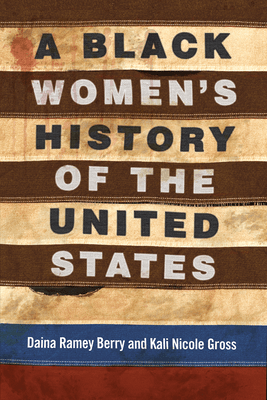
A Black Women’s History of the United States by Daina Ramey Berry & Kali Nicole Gross
Centers the voices of African American women to reveal their vital role in shaping the nation, from the earliest days of slavery to the present. Historians Daina Ramey Berry and Kali Nicole Gross highlight the diverse experiences of Black women—enslaved, free, queer, radical, and religious—offering a powerful and complex portrait of resilience and community. This vibrant history challenges dominant narratives and celebrates Black women’s enduring contributions to resistance, culture, and identity.
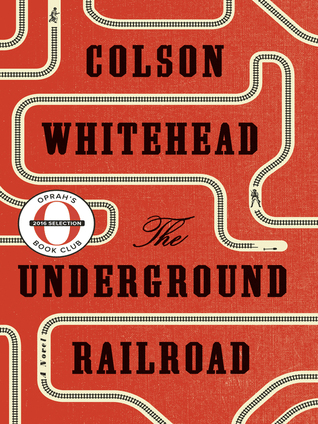
The Underground Railroad by Colson Whitehead
Follows Cora, a young enslaved woman in Georgia, who escapes with Caesar via a literal underground train system in Colson Whitehead’s bold reimagining of American history. As they journey north, each stop reveals a new and often sinister reality, while they’re relentlessly pursued by a slave catcher. Blending harrowing adventure with historical allegory, the novel powerfully explores the enduring scars of slavery and the elusive quest for freedom.

Four Hundred Souls: A Community History of African America, 1619 – 2019 by Ibram X. Kendi
A sweeping, collaborative history of Black America, chronicling 400 years from 1619 to the present through the voices of 90 Black writers. Curated by Ibram X. Kendi and Keisha N. Blain, the book unfolds in 80 short chapters that blend essays, poems, and personal reflections to illuminate the resilience, creativity, and struggle of African Americans across centuries. This powerful collection reclaims forgotten narratives and reshapes how American history is told.
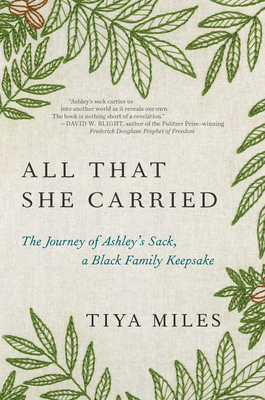
All That She Carried: The Journey of Ashley’s Sack, a Black Family Keepsake by Tiya Miles
Tells the powerful true story of a cotton sack given by an enslaved mother, Rose, to her daughter Ashley before they were separated—later embroidered by Ashley’s granddaughter as a record of love and survival. Historian Tiya Miles traces this family’s story through sparse archival clues, illuminating the lives of generations of Black women who endured slavery and its aftermath. The book is a moving tribute to resilience, memory, and the enduring bonds of maternal love.

Life and Times of Frederick Douglass
The final and most detailed autobiography of the famed abolitionist, offering an expanded account of his life in slavery, his daring escape, and his rise as a leading voice for freedom and justice. Douglass reflects on the brutality of slavery, his path to literacy and activism, and his later roles as orator, writer, and statesman. Spanning from his early life to his diplomatic service and public career, the memoir is a profound testament to resilience, intellect, and the enduring fight for equality.
The 1619 Project: A New Origin Story by Nikole Hannah-Jones
Reframes American history by placing slavery and its enduring legacy at the center of the national narrative. Expanding on the original New York Times project, this collection includes essays, poems, and fiction that explore how the legacy of 1619 continues to shape American life—from politics and capitalism to culture and education. Curated by Nikole Hannah-Jones, it offers a powerful examination of Black Americans’ role in expanding democracy and calls for reckoning with the country’s past.

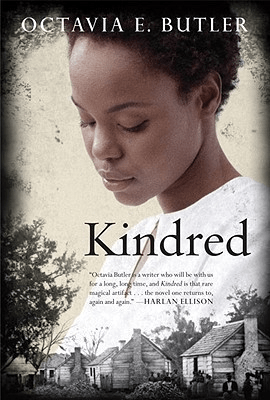
Kindred by Octavia E. Butler
Dana is mysteriously pulled back in time from 1970s California to the antebellum South, where she must repeatedly save a white plantation owner’s son. Each trip grows more harrowing, forcing Dana to confront the brutal realities of slavery firsthand. This powerful novel explores the lasting impact of racism, sexism, and white supremacy across time.
Twelve Years a Slave by Solomon Northrup
Northup’s powerful firsthand account of being kidnapped from his free life in New York and sold into slavery in Louisiana. Enduring twelve years of brutal captivity under cruel masters, Northup’s resilience is tested until a chance encounter with a Canadian abolitionist offers hope. His memoir remains one of the most accurate and unforgettable portrayals of the horrors of American slavery.

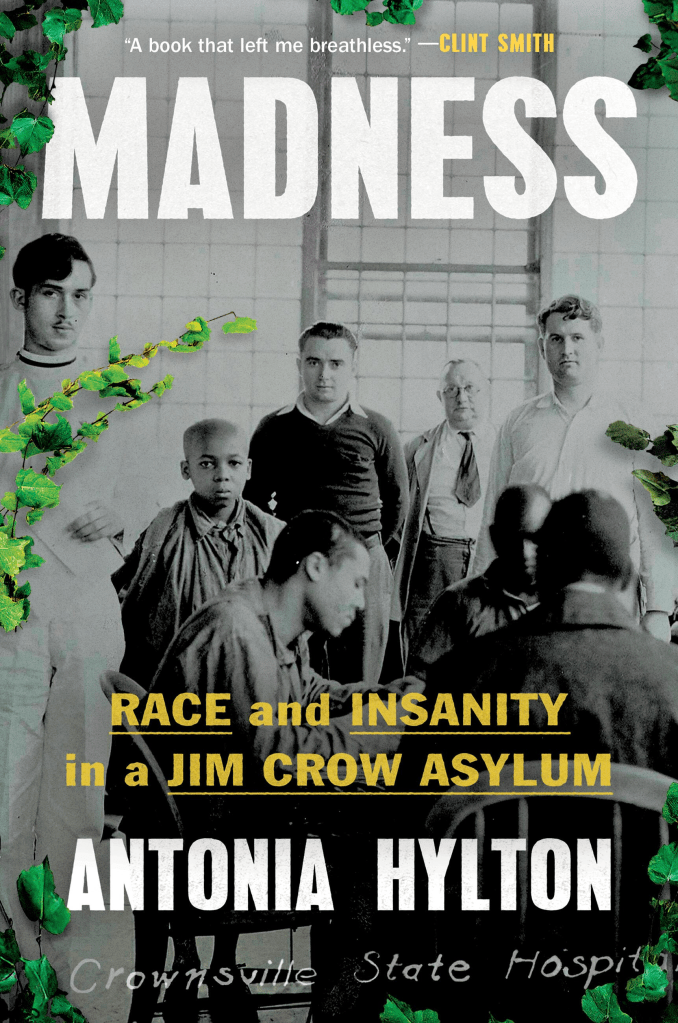
Madness: Race and Insanity in a Jim Crow Asylum
A gripping 93-year history of Crownsville Hospital, one of the last segregated asylums in the U.S., where Black patients were once forced to build and inhabit the institution meant to treat them. Blending investigative journalism, personal narrative, and archival research, Hylton uncovers the neglected stories of patients and families impacted by systemic racism in mental healthcare. The book offers a powerful meditation on how America has historically treated—and often failed—its most vulnerable.
Black Ghost of Empire: The Long Death of Slavery and the Failure of Emancipation by Kris Manjapra
Reveals how the abolition of slavery across the Atlantic world often reinforced racial hierarchies rather than dismantling them. From Britain to the Americas and Africa, so-called emancipations denied reparative justice to the formerly enslaved while compensating enslavers and enabling new forms of exploitation. This powerful, paradigm-shifting work exposes the enduring legacy of slavery and the urgent need for true reckoning and repair.

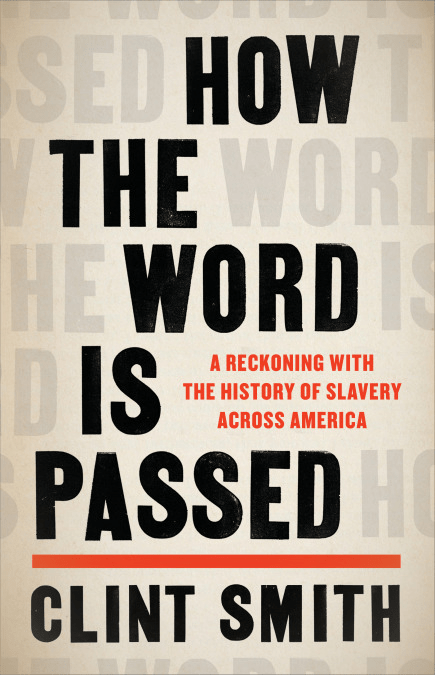
How the Word is Passed: A Reckoning with the History of Slavery Across America by Clint Smith
Poet and journalist Clint Smith travels across the U.S. to examine how the legacy of slavery is remembered—or obscured—in monuments, landmarks, and public memory. From Monticello to Angola Prison, Smith uncovers the hidden histories embedded in familiar places, revealing how slavery shaped America and continues to influence its present. Deeply personal and richly researched, the book offers a powerful reflection on how truth-telling and memory can guide national reckoning and reconciliation.
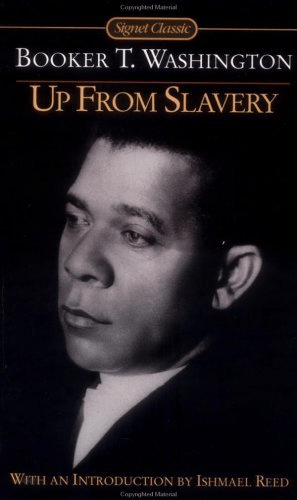
Up from Slavery by Booker T. Washington
Washington’s inspiring autobiography, chronicling his journey from enslavement to becoming a renowned educator and founder of the Tuskegee Institute. Through personal reflection, he shares how hard work, education, and self-determination shaped his philosophy for Black advancement in post-Reconstruction America. The memoir offers a firsthand account of resilience and hope in the face of oppression.

Master Slave Husband Wife: An Epic Journey from Slavery to Freedom by Ilyon Woo
The astonishing true story of Ellen and William Craft, an enslaved couple who escaped to freedom in 1848 through an ingenious plan—Ellen disguised herself as a disabled white man while William posed as her enslaved attendant. Their daring journey from Georgia to the North, and eventually to England after the Fugitive Slave Act, captivated the nation and made them powerful voices in the abolitionist movement. This gripping tale is both a love story and a bold act of resistance that tested the very ideals of American liberty.
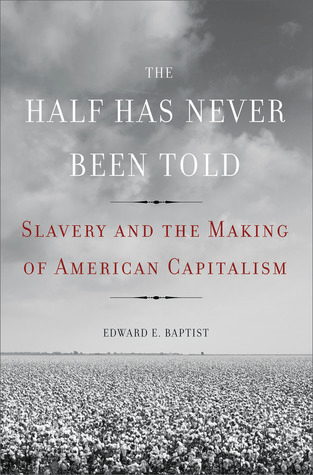
The Half Has Never Been Told: Slavery and the Making of American Capitalism by Edward E. Baptist
Baptist argues that slavery was not a pre-modern anomaly but the driving force behind America’s economic rise. Through firsthand accounts and historical records, he shows how the expansion of slavery fueled U.S. capitalism, global power, and industrialization. The book challenges readers to confront the brutality at the heart of American progress and the resilience of those who resisted it.
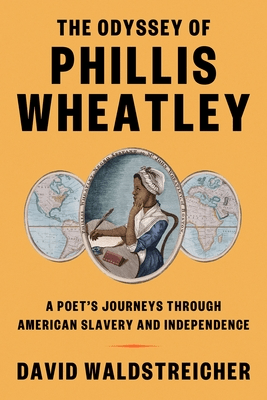
The Odyssey of Phillis Wheatley: A Poet’s Journeys Through American Slavery and Independence by David Waldstreicher
A groundbreaking biography of the enslaved poet whose writings placed African American literature at the center of the American Revolution. Seized from West Africa and later celebrated for her mastery of classical and religious texts, Wheatley used poetry to challenge slavery and engage in the political debates of her time. This richly detailed account revises long-held myths and reveals how her life and work reshaped ideas of liberty, race, and American identity.
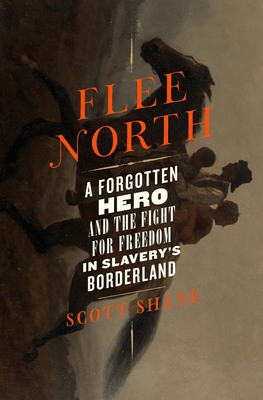
Flee North: A Forgotten Hero and the Fight for Freedom in Slavery’s Borderland by Scott Shane
The gripping, long-overdue story of Thomas Smallwood, a formerly enslaved man who helped hundreds escape bondage and coined the term “Underground Railroad.” Working alongside white abolitionist Charles Torrey, Smallwood organized daring mass escapes and exposed the horrors of slavery through sharp newspaper satire. This powerful biography revives a nearly forgotten hero whose courage and resistance resonate in today’s ongoing struggle against racial injustice.
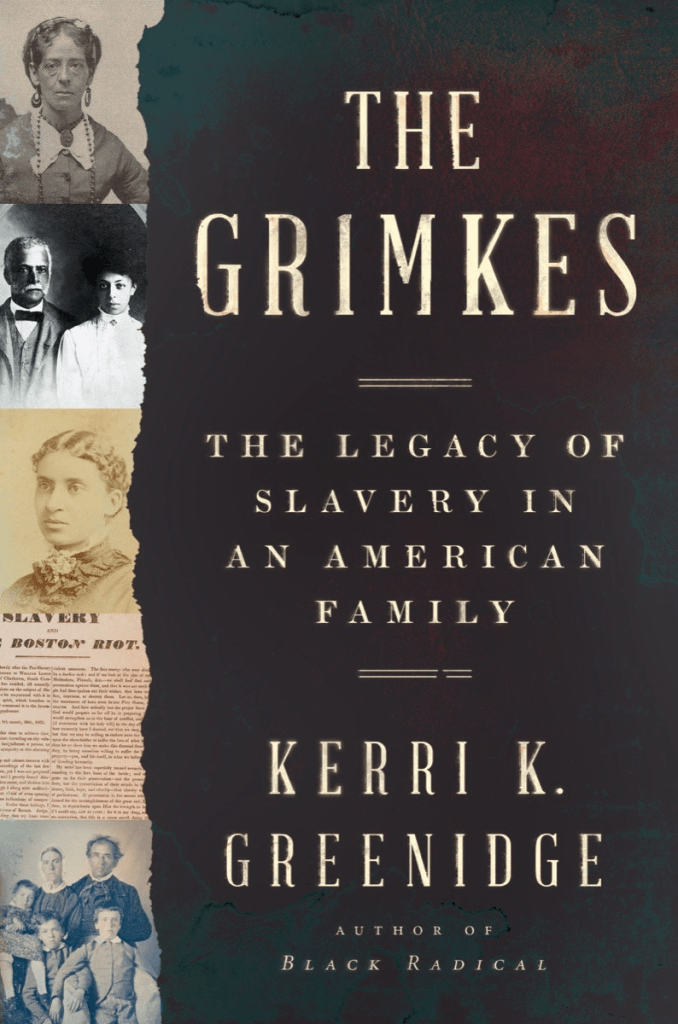
The Grimkes: The Legacy of Slavery in an American Family by Kerri K. Greenidge
Reframes the legacy of the famed white abolitionist sisters by centering their overlooked Black relatives, descendants of their brother and an enslaved woman. Spanning centuries, the book follows the complex lives of the Black Grimkes—activists, intellectuals, and artists—while exposing the limits of the sisters’ racial progressivism. This sweeping biography reveals how the family’s intertwined histories reflect the enduring contradictions of American race and power.
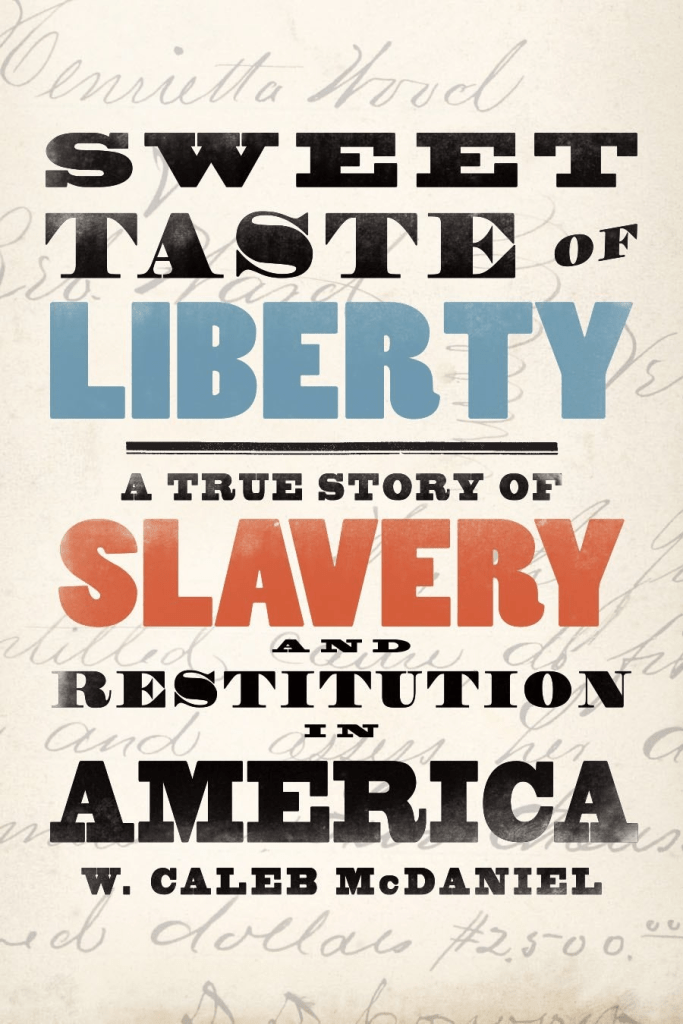
Sweet Taste of Liberty: A True Story of Slavery and Restitution in America by W. Caleb McDaniel
The remarkable true story of Henrietta Wood, an enslaved woman who was freed, re-enslaved, and later successfully sued for reparations. After years of brutal injustice, Wood won a groundbreaking $2,500 settlement in 1878—the largest known restitution for slavery at the time. Her courageous fight offers a powerful testament to resistance, resilience, and the long struggle for justice in America.
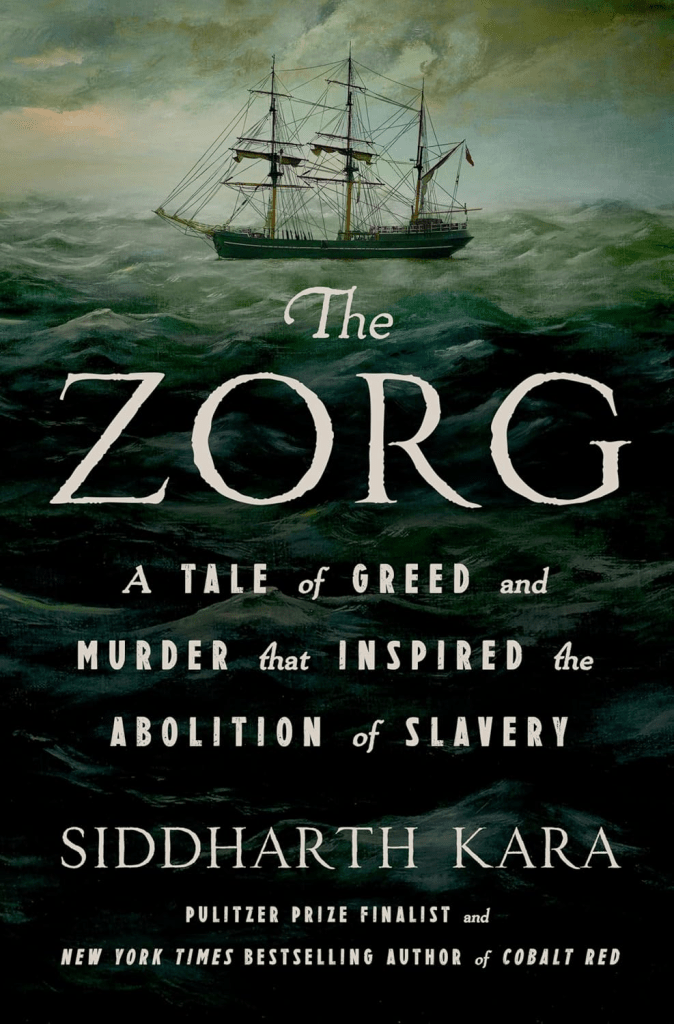
The Zorg: A Tale of Greed and Murder That Inspired the Abolition of Slavery by Siddarth Kara
Recounts the shocking true story of the slave ship Zorg, whose 1781 voyage ended in the murder of 140 enslaved people to conserve resources. The resulting British court case—centered on whether the Africans were people or property—ignited public outrage and helped launch the abolitionist movement. Drawing on deep research and vivid storytelling, Kara reveals how this forgotten tragedy reshaped the global fight against slavery.
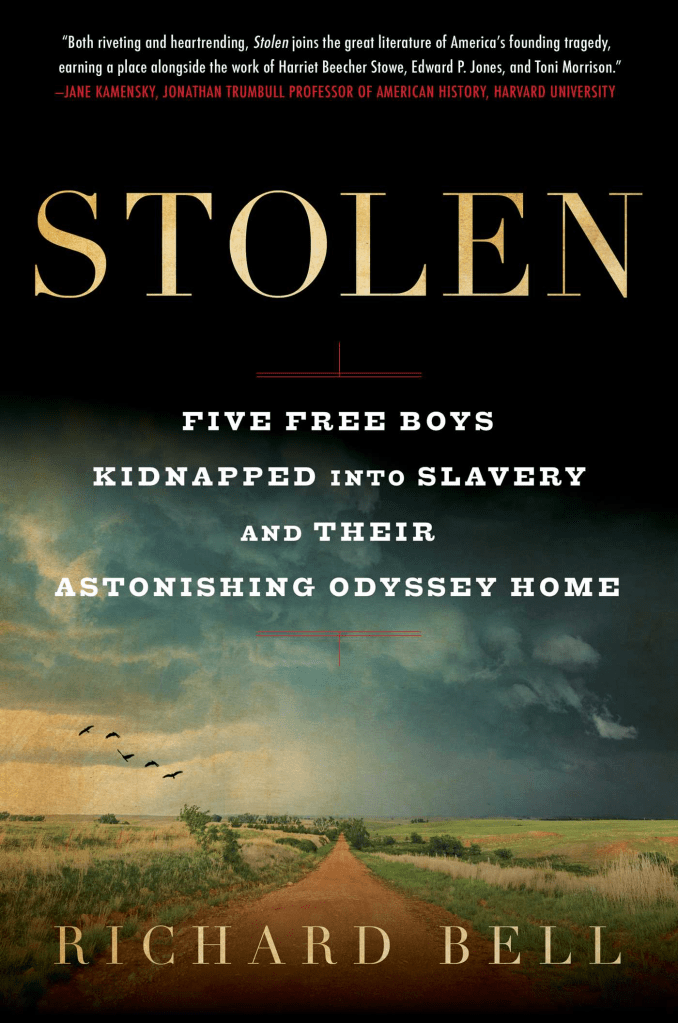
Stolen: Five Free Boys Kidnapped into Slavery and Their Astonishing Odyssey Home by Richard Bell
Recounts the harrowing true story of five free Black boys kidnapped in 1825 Philadelphia and sold into slavery in the Deep South. As they journeyed through the brutal world of the Reverse Underground Railroad, the boys bonded and fought to escape, exposing a dark network that trafficked thousands. Through gripping narrative and deep research, the book reveals how their courage helped challenge slavery’s expansion and injustice.

Happy Dreams of Liberty: An American Family in Slavery and Freedom by R. Isabela Morales
The extraordinary true story of the Townsend family—mixed-race children born into slavery who inherited their white father’s fortune. Spanning the post-Civil War West and South, the book traces how they pursued freedom, wealth, and opportunity in a country still shaped by racism and inequality. This richly researched saga offers a powerful look at race, family, and the complex realities of liberty in Reconstruction-era America.
Slavery After Slavery: Revealing the Legacy of Forced Child Apprenticeships on Black Families, from Emancipation to the Present by Mary Frances Berry
Exposes how white southerners used post–Civil War apprenticeship laws to re-enslave Black children, despite the abolition of slavery. Through court cases and family histories, she reveals the long-lasting, intergenerational harm caused by these legal injustices. The book powerfully argues that these overlooked abuses are central to understanding America’s racial inequality and the need for reparations.

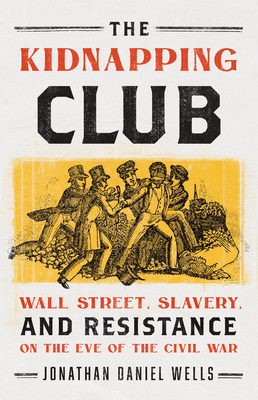
The Kidnapping Club: Wall Street, Slavery, and Resistance on the Eve of the Civil War by Jonathan Daniel Wells
Uncovers the shocking truth about New York City’s deep entanglement with slavery, even after it was outlawed locally. A corrupt network of judges, police, and businessmen enabled the abduction and sale of free Black New Yorkers, sustaining the Southern slave economy. Amid this injustice, Black activists like David Ruggles led courageous efforts to resist, exposing the North’s complicity and the enduring fight for Black freedom.

Remembering Slavery: African Americans Talk About Their Personal Experiences of Slavery and Emancipation by Ira Berlin, Marc Favreau & Steven F. Miller
A groundbreaking collection that brings to life firsthand accounts from formerly enslaved people recorded in the 1930s by the Federal Writers’ Project. Originally released with rare audio recordings, the book offers a powerful, chilling glimpse into the realities of slavery through the voices of those who lived it. Now available again, it continues to provide vital historical testimony for new readers.
Freedom National: The Destruction of Slavery in the United States, 1861 – 1865 by James Oakes
Redefines the history of emancipation by showing how Lincoln, Republicans, Union soldiers, and fleeing slaves together fought to end slavery from the very start of the Civil War. Rather than a gradual shift, ending slavery was a core, intertwined goal with preserving the Union, involving bold military actions and political maneuvers. James Oakes reveals that emancipation was a prolonged, contested struggle culminating in the Thirteenth Amendment, reshaping America’s future.


The Amistad Rebellion: An Atlantic Odyssey of Slavery and Freedom by Marcus Rediker
On June 28, 1839, a group of enslaved Africans aboard the Spanish schooner Amistad staged a daring revolt, seizing the ship in a bold bid for freedom. Captured by the U.S. Navy and jailed in Connecticut, their case reached the Supreme Court, where they were ultimately freed and returned to Africa. In this powerful retelling, Marcus Rediker shifts focus from the usual elite figures to the African rebels themselves, showing how their courageous act reshaped the global fight against slavery.
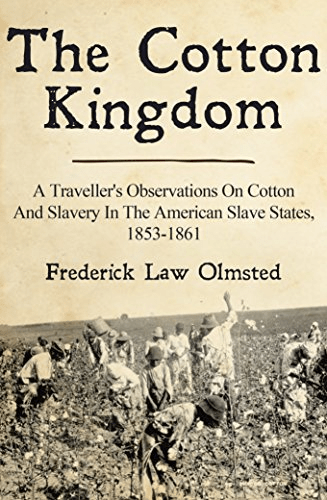
The Cotton Kingdom: A Traveller’s Observations on Cotton and Slavery in The American Slave States, 1853-1861 by Frederick Law Olmsted
Journalist and future landscape architect Frederick Law Olmsted documented his travels through the American South, offering a powerful critique of slavery’s economic and social toll. Contrasting the poverty and stagnation of the slaveholding South with the prosperity of the free North, Olmsted dismantled the myth that “Cotton is king.” His detailed observations became one of the most influential anti-slavery arguments of the era.
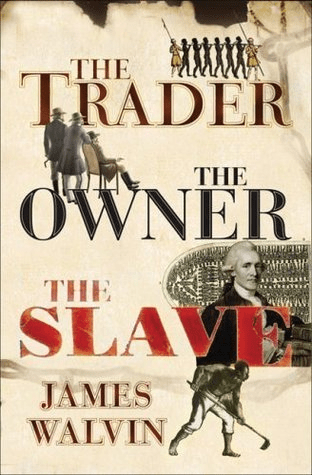
The Trader the Owner the Slave: Parallel Lives in the Age of Slavery by James Walvin
This compelling history explores the Atlantic slave system through the intertwined lives of three contemporaries: John Newton, a brutal slave ship captain turned remorseful hymn writer; Thomas Thistlewood, a Jamaican plantation owner whose diary exposes the cruelty of slavery; and Olaudah Equiano, a formerly enslaved African whose memoir became a powerful voice for abolition. Their parallel stories reveal the human impact and moral cost of slavery in the years leading up to its abolition in 1807.
Humans in Shackles: An Atlantic History of Slavery by Ana Lucia Araujo
A sweeping, transnational history of the Atlantic slave trade and slavery in the Americas, centered on the lived experiences of enslaved people. Drawing on two decades of research and diverse primary sources, the book highlights how African traditions endured in the Americas and underscores Brazil’s central role in the trade. It powerfully connects the legacy of slavery to modern racial inequalities and anti-Black racism across the Western Hemisphere.


Scars on the Land: An Environmental History of Slavery in the American South by David Silkenat
Offers the first in-depth account of how slavery and the Southern environment were deeply intertwined. It reveals how enslaved people’s daily lives were shaped by the land, while slaveholders exploited both labor and nature—draining swamps, clearing forests, and exhausting soils in pursuit of profit. This powerful history shows that slavery not only left scars on human lives, but also on the landscape itself, with lasting consequences still felt today.
 List Kitty
Leave a comment